
On 22 December 2024, villagers battling against coal mining in and around Gondalpura in the Indian state of Jharkhand had a small taste of victory. They forced the cancellation of a public meeting in favour of mining. They are defending farms, homes and a way of life against a spate of coal-mining proposals. One of the biggest is Adani’s project at Gondalpura (misnamed by the government and company as ‘Gondulpara’). In a formidable show of solidarity, villagers have banded together to fight all the coal-mining proposals in the area.
(See the postscript for more recent turmoil as tensions between coal miners and villagers rise)
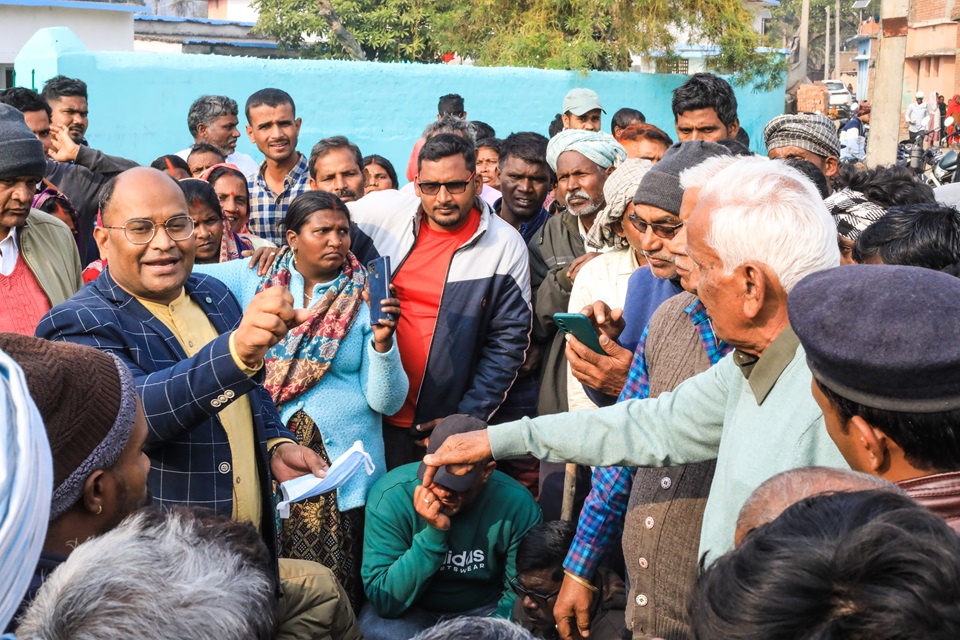
Armed with sickles and sticks, people from the villages of Gondalpura, Baloder, Badam, Gaali, Ambajit, Hahe, Rawatpara and Babupara marched to a public meeting in Ambajit, where there was a public hearing in support of ceding 45 hectares of farmland to the National Thermal Power Corporation (NTPC) for coal mining. The huge crowd of villagers disrupted the meeting, threw down chairs and tables, and demanded that the meeting be cancelled.
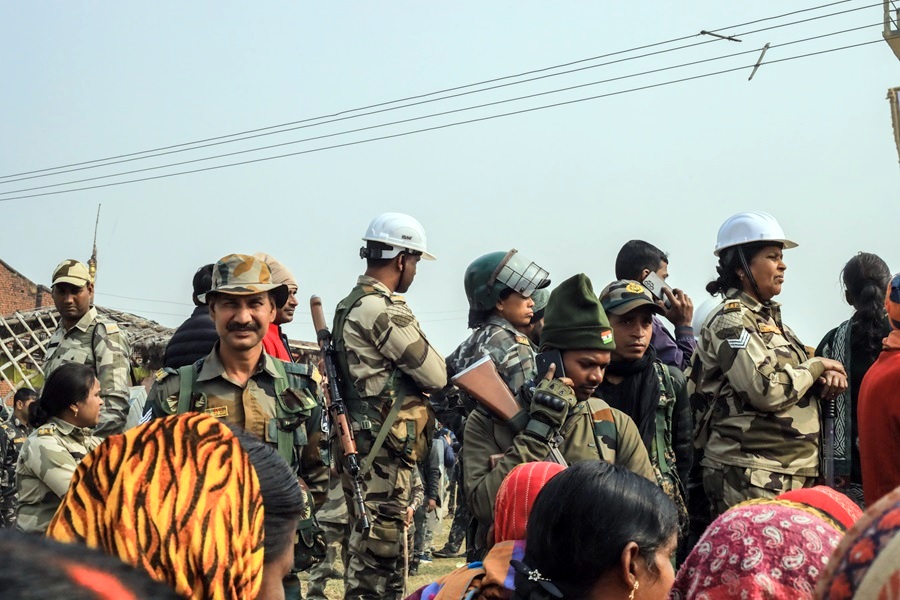
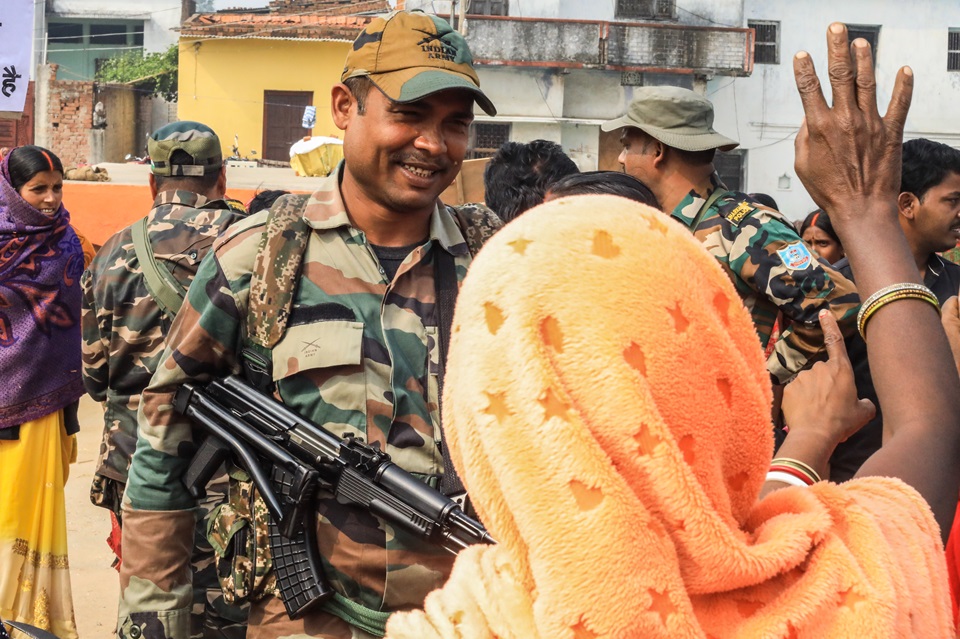
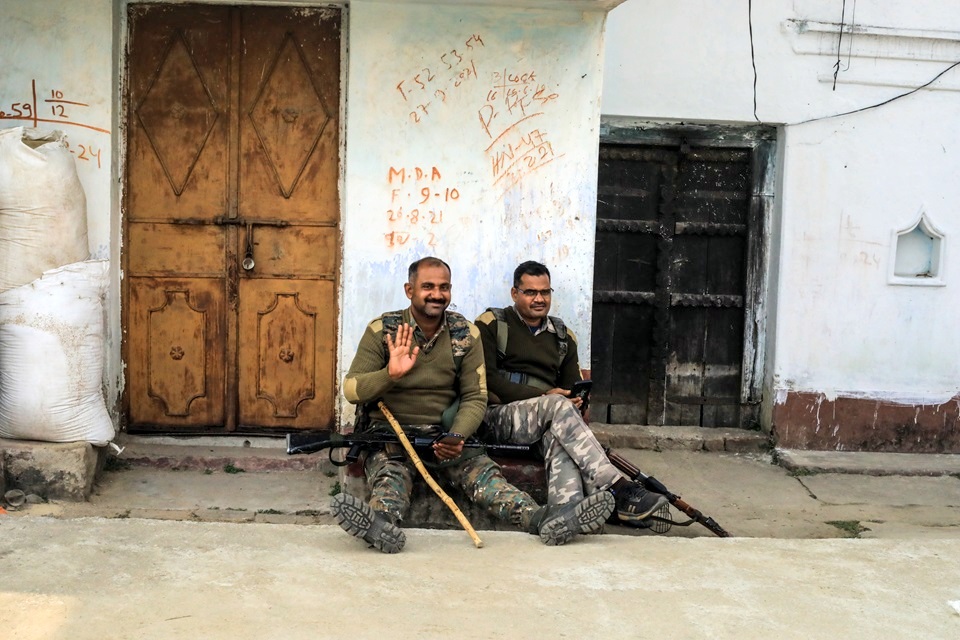
For days there had been rumours that the police would block the bridge at Gondalpura. On 4 October last year, police had fired their guns during an anti-coal protest; there were fears the police would mount a baton-charge this time.
However, there was no violence apart from some pushing and shouting. Numerous protesters had verbal stand-offs with different government officials from 9am to around 4pm. They contended vigorously that the land in question is irrigated, multi-crop and cultivated throughout the year.
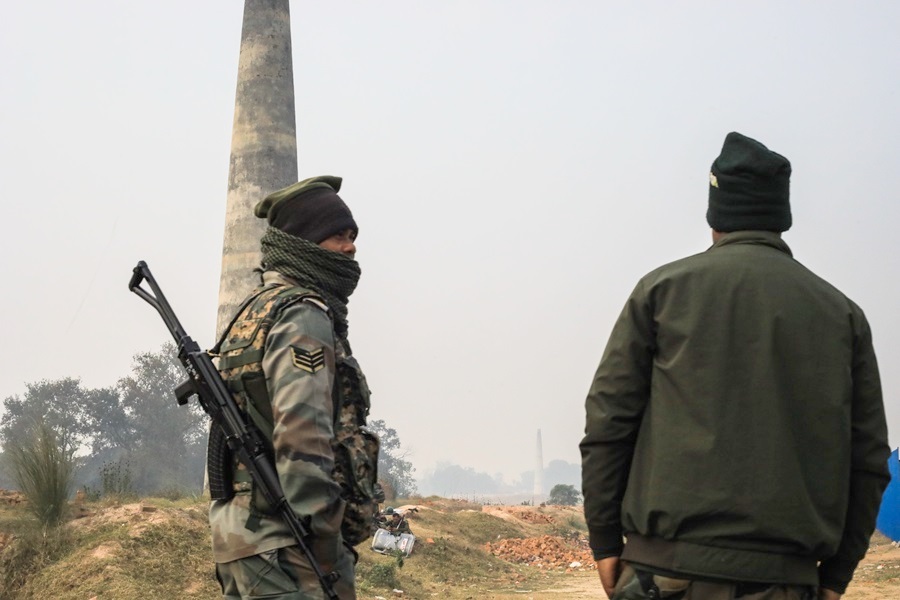
A repeated theme to both the local media and the government was that the company does not have the support of the majority of the villagers of the region. So how can the company start mining by speaking to so few people or a single village or two?
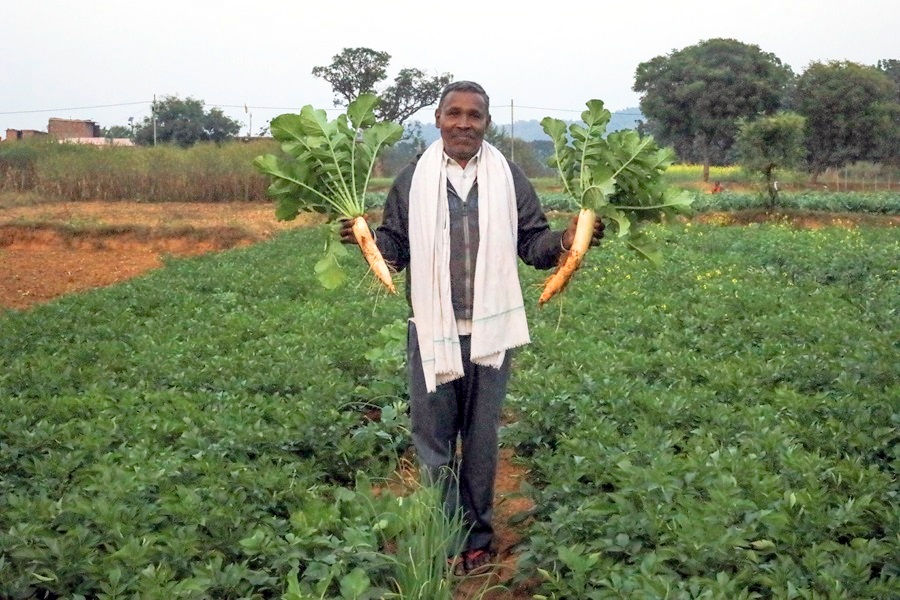
Chaita Mahto was one of the attendees of the protest. This correspondent had visited his farms just a few days earlier.
‘Have you ever seen radishes this big?’, Mahto asked. ‘Yes, there is coal ten feet under my lands, but I put no fertiliser on my crops. My two sons are educated and working in the cities, but during harvest time, they take time off and come and work in our fields. I easily make two lakhs or so (about US $2500) per year from my two-three acres of land. My brothers also have that much land.’
The Circle Officer (the local police officer responsible for law and order in a regional sub-division) from Barkagaon police station had the authority to cancel the meeting but refused to do so. Women surrounded and heckled him, and his own police colleagues left him to the protesters while they wandered around and waited for his decision. A member of the Zilla Parishad symbolically offered him coal to eat, to signify that that the proposal is to mine multi-crop land.
(Article continues below)


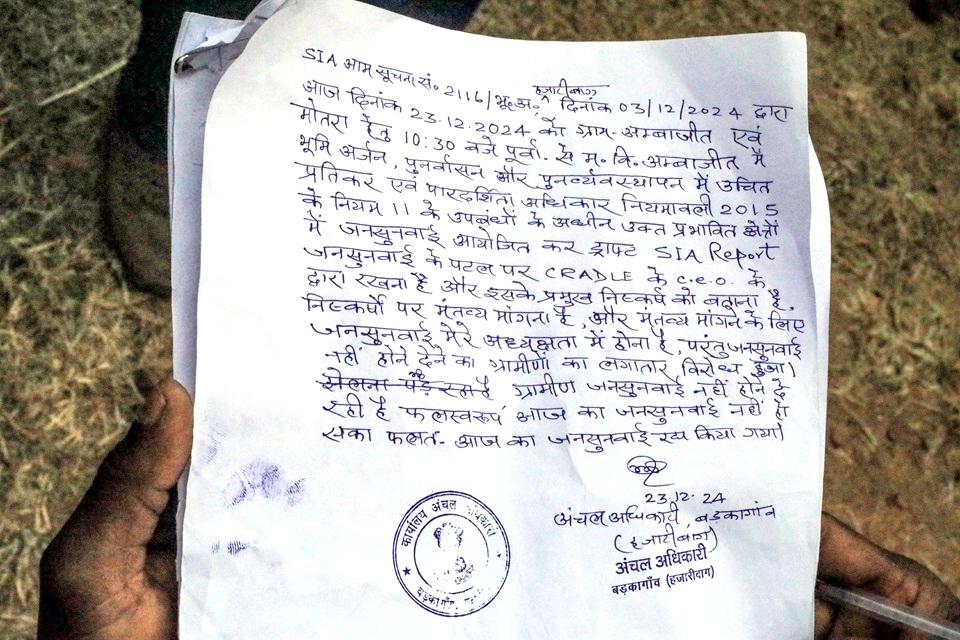
The success or failure of the protest hinged on whether the circle officer would sign a document recording that the public meeting, a necessary part of the approval of land acquisition for the mine, had been called off.
‘He knows that if he signs this document, he cuts off the legs of the company,’ said one protester.
The newly posted Circle Officer, Manoj Kumar, refused to sign the document even after repeated exhortations. Protesters jeered, asking how much money he got from the companies when he knows no one wants mining here.
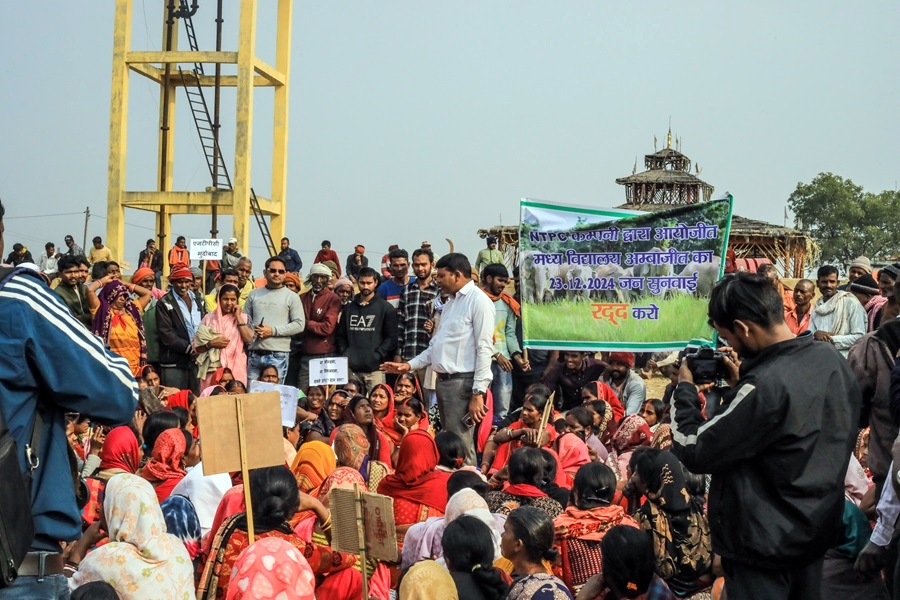
After numerous phone calls, it took him more than three hours to decide to write and sign a document to cancel the meeting, but the first time he wrote it, the villagers didn’t approve and wanted him to write it again. The reason for the disapproval, as in most agitations, was that they wanted him to write that the ‘public meeting will never happen again’. He would eventually sign the document to the approval of the villagers, and the police and the government officials all left around 4pm, to a cheering but exhausted crowd.
The document stated that due to the continuous protests of the villages, the public hearing for today would be cancelled.
The villagers knew that there would be First Information Reports (FIRs are the first step in a police prosecution) and cases against them, but as one villager from Badam said, ‘let them put all 20,000 of us into prison, then they will have to feed us.’
When asked about the rowdy ‘direct action’ against the nearby office of another mining company on 4 October 2024, a leader of the movement said ‘that the company doesn’t want arrests against anyone because they think they can win us over.’
‘But once mining starts anywhere, they will put all the leaders in jail.’
He was asked how many public hearings he had attended to seek their cancellation.
‘Maybe twenty to thirty,’ he responded.
After the cancelled meeting, many people were asking ‘but when will these people [the officials from the mining companies and the government] give up and leave us alone?’.
‘It’s difficult to keep leaving our own work to do this,’ said a tired protester once the company people had left. ‘But we’ll keep doing it until they give up’.
Why did the company come to Ambajit?
Ambajit is a Bhumihar-dominated village, whose well-off populace has converted their lands to brick kilns. Bhumihars are historically known as landowning farmers and are an upper-caste community. Most of the ones in Ambajit don’t even live in the village; they live in Ranchi (the state capital) or Hazaribagh.
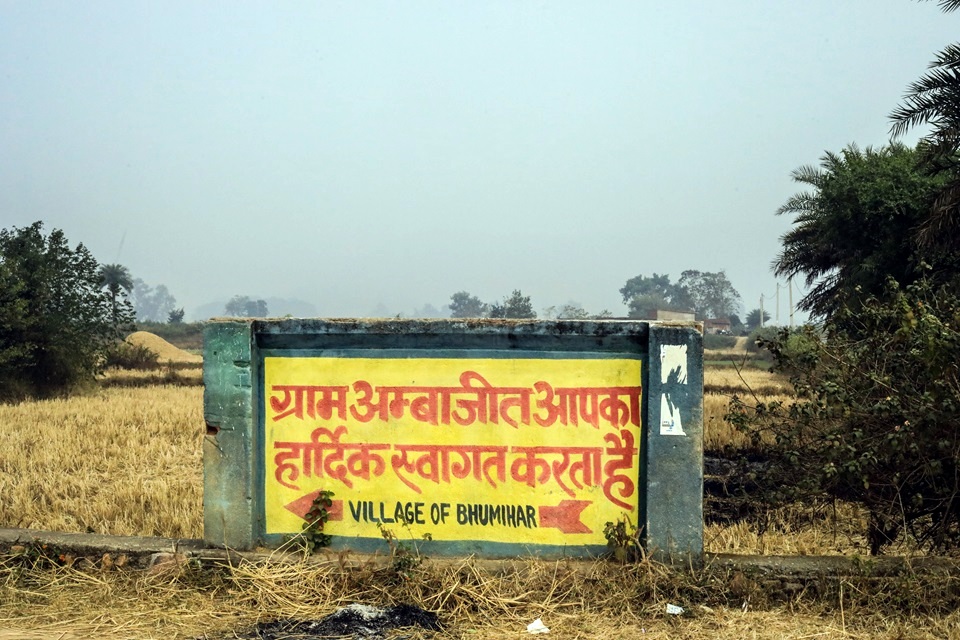
One young man spoke to this correspondent. He said he was in ‘wholesale’, supplying shopkeepers with their products. He lives in Ranchi and his large house in Ambajit lies empty for most of the time. His family even has land in Balodar, which had been uncultivated for decades because of the presence of the ultra-left Maoist Communist Centre, which has more or less disappeared from the region today.
He complained that the compensation they will get for their land from the mining company would not be enough, and had helped supply the protesters with drinking water once the nearby shops had run out. It had been a warm, sunny afternoon and the protest had gone on for a long time; the villagers were thirsty.
There are other locals like Gopinath Singh, an elderly resident of the village, who is against mining in the region. He is described by other villagers in the village as an ‘arabpatti’ (billionaire), and in a previous meeting had spoken about how the ‘agitation’ must be courageous. Throughout the day, he was constantly seen arguing with the state police force’s Sub-Divisional Officer Ashok Kumar.
Since almost every village in the region is adamantly against mining, Ambajit, with its population already distant from their lands and farms, seemed an easy target for the companies. There was just one problem; it is right next to the villages with the most militant anti-mining sentiment – Babupara and Gondalpura.
The villagers of Gondalpura are aware that if mining commences anywhere near them, it means a defeat for their own movement. And recent allocations of coal blocks to other companies such as EMTA, Jindal and NTPC mean that it is irrelevant who does the mining.
They know that Adani is not just a man or a family; it is part of a system – a system that believes in nothing but private profit, even at the cost of whole communities.
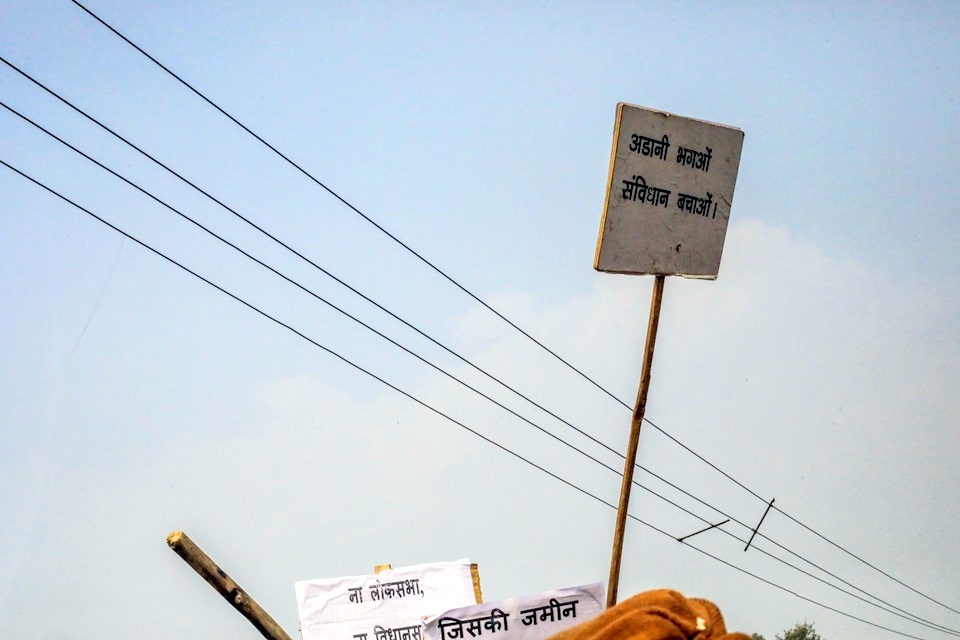
Postscript: Since December 2024, the resistance against coal mining has escalated. According to a Times of India story, employees of a coal-mining company were held captive by villagers of Barkagaon for having commenced coal operations without permission. On 2 February, the villagers of Gondalpura held an indefinite sit-in in their village against all companies and on 5 February, they marched to the village of Chandaul and forced the cancellation of another public hearing.
